
 Unbelievable expresiveness
  120+ Shared Sets
  Unbelievable Breadth
  Responsively Designed
  Partners with Libraries You Love
  Liberate your Development
 Looking for help?
- Use our help center
- Check our FAQ
- Submit an Issue
- Join our Chat
- User Forums
- Docs
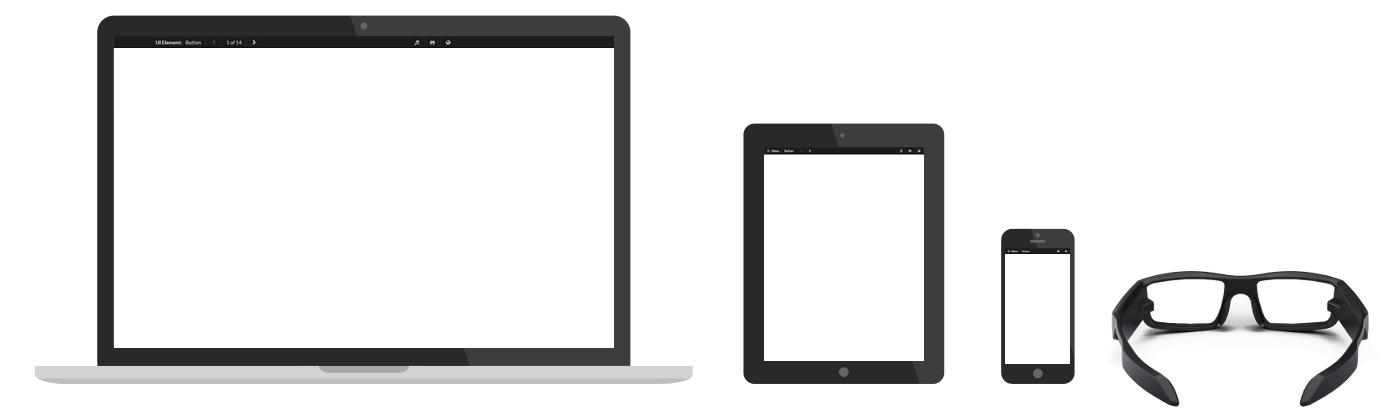
Semantic Types hopes to create a simple system in which types and the relationships between them, together with the events helping manage their interactions are captured in a detailed, well-defined context that aims to specify their full behavior, and to enable people and computers to work better in cooperation.
Semantic Types aims to give its users the ability to:
Types, relations and events form the building blocks of the Semantic Types system.



Types are used to describe concepts and physical objects - both natural and artificial. Types are one of the fundamental unit of the system, but there is no clear definition as to what really constitutes a "type", and it is rather the combination of types and relation that allow us to define a type.
Relations are used to describe the associations between Types and fall into two major categories: is-a (supertype-subtype) and has-a (used for aggregation, composition and containment).
Events cover activities - human or machine - and behaviors, as well as natural phenomenons and human initiated processes.
For simplicity we'll refer to data as carying no semantics other than what can be infered from it. All other information that help categorizing it, giving hints to its behaviour, or instructions for how to process or present it, we will refer to as metadata.
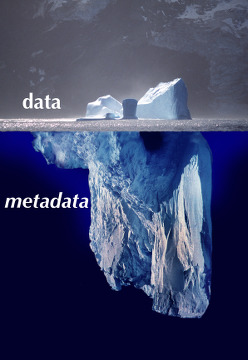
Historically the data was usually handled by the code, which controlled metadata and most often hardcoded it in its logic. One of the first attempts at providing the users the ability to feed metadata together with the data came from the markup languages. However, one of the challenges of markup languages and hypertext in particular is with how it mixes together presentation metadata and data in the form of content. More recent efforts to create web applications added Javascript into the mix, and in the process it went back from the simple use of text to requiring programming mixed with presentation and data to drive these web applications.
Our goal here is to provide a distributed platform where the user can describe the data and the intended behavior of the system in a declarative fashion with a clear separation of concerns described in machine language based on an evolving language where developers get to collaborate in real time to provide the needed building blocks (relationships and events).
One of the first attempts at providing the users the ability to feed metadata together with the data came from the publishing world, to supporting the increasingly complex demands of printing and it involved the use of specific control codes and macros inserted in the data.
The late 1960s saw the introduction of generic descriptive tags and efforts to separate the information content of documents from their format, which evolved throughout the next decade into SGML.
Then in 1989 the Hypertext was introduced as a human-readable information linked together in an unconstrained way. Over the last three decades the hypertext has evolved to become the backbone of the global information system - the WWW - sharing the collective knowledge of individuals with each other through the Internet.
While the Hypertext was instrumental in defining the distributed network the web relies on, one its early advantages which brought its fast adoption - that it links information together in an unconstrained way, and the simple mix of presentation metadata and data - also meant a lack of structure.
Recent efforts in the 2010s saw the introduction of the Semantic Web. The Semantic Web seeks to add a layer of semantics on top of the current WWW, so rather than discovering data through text searches, the Semantic Web creates and exposes large ontologies of concepts. The Resource Description Framework (RDF) provides the basic capability to define classes, subclasses, and properties of objects.
Additionally, data mining and machine learning gives developers technology to provide order on a constantly evolving network of knowledge. Defining ontologies that are static and incapable of evolving in real time would be very limiting for web-based systems, so the search is on for new technologies that provide the ability to deal with the dynamic environment of the Internet.
From the vision of memex to Xanadu, from the implementations of NLS to Videotex, and from HTML to RDF there is a diverse and long history of ideas and projects helping make data more open and accessible.
Semantic Types is available at semantic-ui.cn a mirror site hosted inside China. This should make browsing much faster for those visiting from mainland China.